I. Introduction
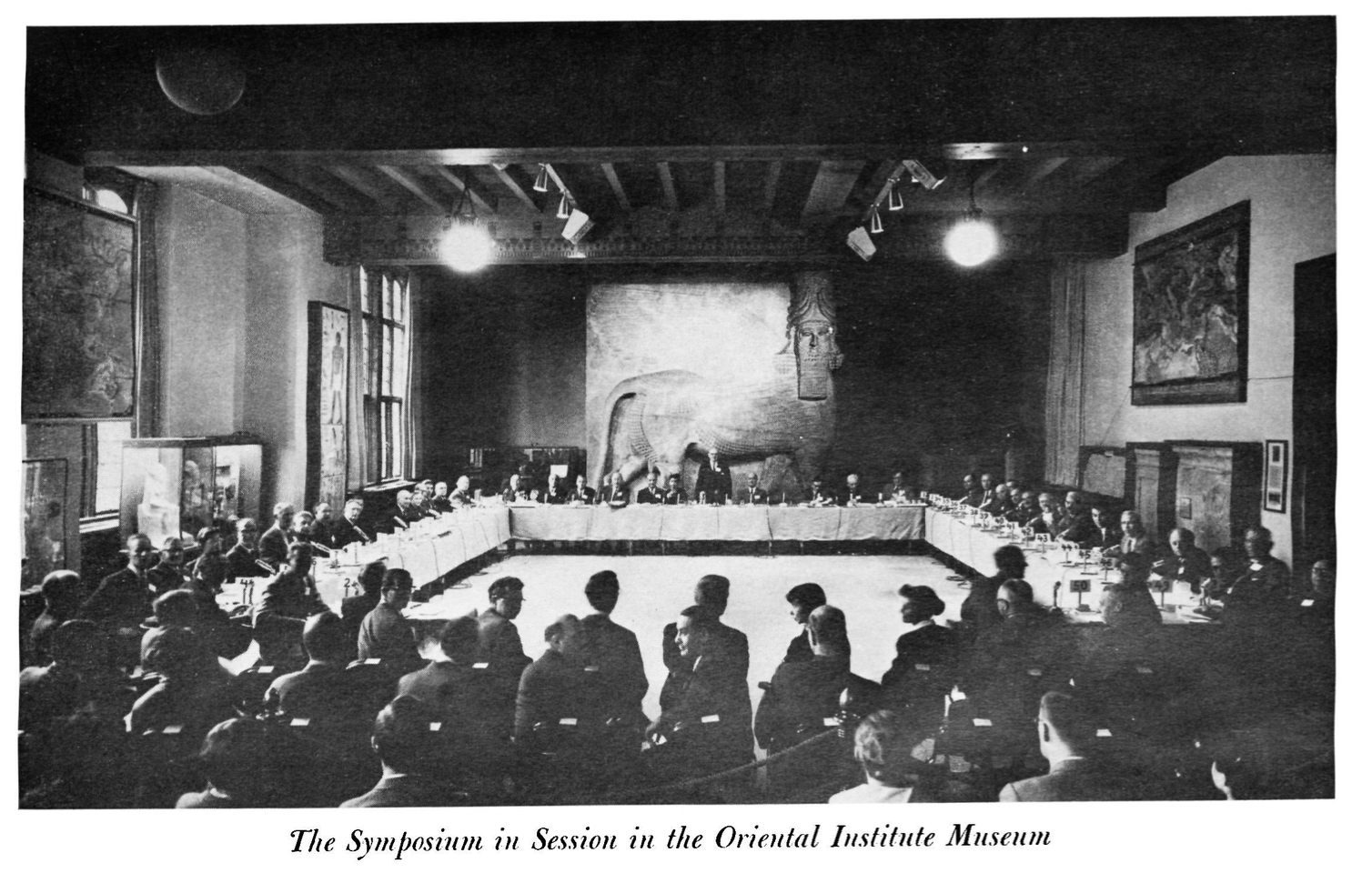
In 1958, the University of Chicago held a symposium to explore the origins of civilization in the Near East and the lessons it held for our understanding of urbanism and empire. The title of the symposium was “City Invincible” and opened with Walt Whitman’s “I Dream’d in a Dream” :
I Dream’d in a dream, I saw a city invincible to the
attacks of the whole of the rest of the earth,
I dream’d that was the new City of Friends.
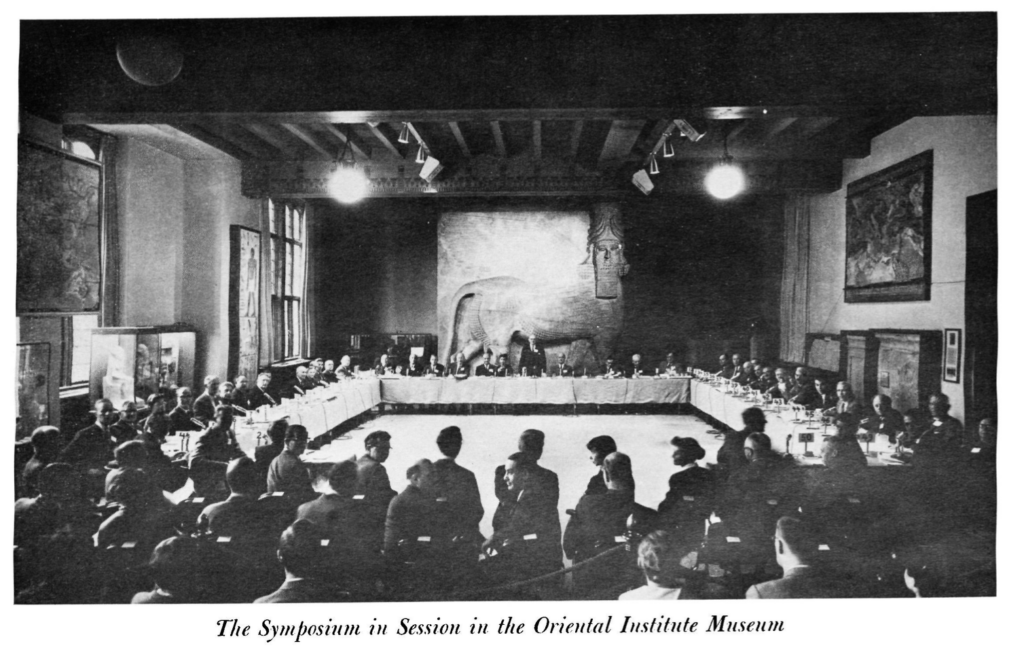
The conference is infused with the energy and spirit of the American empire. And thus, the symposium opens with the following questions: “What ecological and other factors led to the growth of cities? How does the life of the concentrated urban society affect culture? When the city-state gives way to empire is the culture pattern changed?” (p. v). It is a question that goes back to the beginning of modern political philosophy. Machiavelli asked, Can a republic survive when it becomes an empire? The American empire sought new ways to understand an old question. This was the setting in which Karl Polanyi presented his influential paper on the Mycenaean economics. In “On the Comparative Treatment of Economic Institutions in Antiquity with Illustrations from Athens, Mycenae, and Alalakh, Karl Polanyi provides his most clear and succinct articulation of his method of comparative analysis.
II. Method and Theory
What can the analysis of economic institutions teach us about the relation between economics, territorial expansion, culture, and social growth? Polanyi does not tell us at the outset. He asks us, first, to look into the relations between economy and politics in society and, second, how money is used (institutionalized) in the bronze age palace economy. In order to look at these relations, he provides a helpful overview of the method of “substantivism” he introduced to economic anthropology. “Institution” is the key concept of Polany’s analysis. “The economy… is an institutionalized process” (p. 329). Since scholars have trouble understanding exactly what an institution is, it is worth citing Polanyi’s definition: “a sequence of functional movements that are embedded in social relations” (p. 329). Therefore, the economy is “an institutionalized process” with two basic constituents:
Functional Movements: “the function of movements is to supply a group of individuals with a flow of material goods” (p. 329).
- Locational: in relation to other things.
- Appropriation: in relation to people.
Social Relations: “the social relations in which the process is embedded with a measure of unity and stability” (p. 329).
Polanyi is not interested in “the material resources and equipment – the ecology and technology – which make up the process” (p. 329). He is interested in “institutions.” This, unfortunately, is rather vague. Nonetheless, it has been extremely influential. It is indicative of the shift in focus that took place in economics in the 20th century. Adam Smith’s labor theory of value and Karl Marx’s socially necessary labor time theory of value no longer served to explain the generation of prices and profit from the point of view of commodity movement. With the shift from the analytical language of the commodity and labor to “goods and services,” economy as a discipline shifted its primary concern from production to consumption (See Gregory 1984 for a concise overview of the intellectual history). As Rosa Luxemburg had pointed out as early as 1906, this marked the shift from the principle analysis of the means of production to the means of consumption. The consequences, in her view, are catastrophic for our general understanding of class and the class struggle. [The extent to which the model of Austrian economics and the marginal utility theory of value transformed intellectual Marxism in the early 20th century is poorly understood and needs further study].
To Polanyi’s credit, he is aware of “the inherent limitations of such a treatment particularly from the point of view of general sociology” (p. 330). It is a method he defends on purely pragmatic grounds: “it helps to disentangle” the economy from other sociological categories of analysis. To understand the basic typology of social relations in which “goods and services” move, Polanyi re-articulates his 3 “Patterns of Integration.” (This is a continuation of the basic theory he put forth in Trade and Market in the Early Empires (1957). The system is both historical and non-historical. For instance, “In earlier societies integration happens as a rule through the redistribution of goods from a center or through reciprocation between the corresponding members of a symmetrical group” (p. 330). No “stages theory” is “implied” – “a pattern may appear, disappear, and recur again at a later phase of the society’s growth” (p. 331).
- Reciprocity: “institution(s)… inherent in the pattern” = “symmetrical structure” (p. 331) / “characteristic institution(s) such as the drawing of lots for the division of booty or for the assignment of land or the allocation of burdens ‘in turn’ under a reciprocity pattern” (p. 332).
- “Reciprocity, as between kin or neighborhood groups, may link individual partners or comprise a whole sequence of symmetrical situations ‘in turn’” (p. 331).
- “Reciprocity was widespread among kinship-organized societies and still survives as the raison d’etre of Christmas trade of Western cultures” (p. 331).
- Redistribution: “institution(s)… inherent in the pattern” = “a degree of centralization” (p. 331)
- “Redistribution was regularly practiced in primitive tribes at the hunting and collecting stage.; eventually it became a function of archaic administration, while in modern times it is a feature of industrial planned economies” (p. 331)
- (4) Householding: “the manner in which a peasant economy or manorial estate is run” “thought formally this is redistribution on a smaller scale” (p. 330).
- Exchange (or Barter): “institution(s)… inherent in the pattern” = “price-making markets for integration through exchange” (p. 331). “Already at this level institutional variants offer, for instance, temple or palace as a redistributive center.” (0. 331)
- “To have an integrative effect, this pattern needs the instrumentality of price-making markets, as in the 19th century where a supply-demand price mechanism produced integrative prices. The mere presence of market elements or even of nonprice-making markets in a peasants’ and craftsmen’s society does not produce an exchange-patterned economy” (p. 331).
- Only the 19th century. Does not count if the state has control over prices.
Last, this model demands a definition of Money, which Polanyi defines as “fungible things in definite use, namely payment, standard and exchange” (p. 341). They are “durable objects that are quantifiable, whether by counting or by measuring” (citing Roman law, quae numero, pondere ac mensura consistunt). Polany also clarifies: Money =
- Payment: “handing over of fungibles with the effect of ending an obligation” (p. 341)
- Standard: “fungibles serves as numerical referents” (p. 341)
- Exchange: “fungibles are handled as middle terms (B) in direct exchange , where C is acquired for A through the medium of B.
This definition is close to that provided by modern economics.
III. Money and Market in West Asia and Greece
“The first call for a comparison of Mycenae with the palace economies of West Asia was Michael Ventris himself. Again and again he named those of Sumer, Ur, Babylon, Assur, the Hittites, and Ugarit as parallel instances, not omitting Alalakh from the list” (p. 346). The primary comparison is drawn on the basis of whether or not (or to what extent) money is used. It is clear, despite the qualifications that are made theoretically, that Polanyi is concerned with the historical development of money. As he writes, “In light of these considerations, we shall try to penetrate the earliest history of money” (p. 344). He states, for instance, that “from times immemorial wheat has been distributed in the Indian village community” (p. 344). It is also clear that he believes that egalitarian reciprocity preceded the development of redistribution (especially the hierarchical redistribution connected with centralization in the Bronze Age):
From time immemorial wheat has been distributed in the Indian village community to the various claimants – tillers, craftsman belonging to their respective castes, village officials, and last but not least, the landlord and the prince – by the simple means of handing out grains from the heap in a certain sequence which combines portions of absolute amounts with a number of unit measures that go to each in turn. (p. 344)
Mycenae, by contrast, represents an important case study because it appears to be lowest on the scale (or spectrum) of money development in comparison to the palace economies of West Asia.
A. Palace Economy: Mycenae (Staple Finance)
“Michael Ventris, the decipherer of Linear B, has asserted the absence of money in the palace economy of Mycenaean Greece” (p. 340). For Polanyi, there was no money in Mycenae. The evidence he is using is taken from the Ventris & Chadwick publication of the Pylos and Knossos Tablets. Polanyi writes, “To state that money was absent in Mycenae strictly means that none of the staples were handled in a situation and manner that would amount to their use as payment, standard, or exchange” (p. 342). One confusion that must be clarified later is the contention that Sumer, Babylon, and pre-conquest Mexico used “staples” as “money” (p. 342). He provides a brief overview of the palace society of Myencaen civilization on pd. 342. (Little has progressed since his essay more than 60 years ago.) There were “slaves” he notes (p. 342), but these do not figure in his analysis of economic institutions:
The authentic core of the Mycenaean economy was the palace household with its storage rooms and its administration which listed personnel, land-ownings, and small cattle, assessed deliveries in which listed personnel, land-ownings, and small cattle, assessed deliveries in wheat or barley, oil, olives, figs, and a number of other staples (largely identified), and handed out as rations. The rest is conjectural; Homer’s nine towns that belonged to the king of Pylos have been found, surrounded by a considerable number of villages with their common land and peasant holdings. There were slaves, a class of dependent laborers, also soldiers and oarsmen, who were sometimes recipients of rations, which, however, went mostly to women and children. Manufactures were carried out by craftsmen and artisans, many belonging to the palace and others only being supplied with raw materials from there. The products may have been partly employed in trading for the palace. Yet the outstanding fact about the inventory and the accounts is and remains the complete absence of money. One kind of goods can never be equated with, or substituted for, an amount of goods of a different kind. Accounts were strictly separate for each kind. (p. 342).
The question, for Polanyi, is: how could the palace administration maintain an economy that extended over the Messenian plain (the territorial size of a city-state)? The answer is “staple finance” – “which showed an elementary from of taxation without the intervention of money” (p. 243).
Staple finance: “Staple finance is the dealing with staples on a large scale, involving inventories and accountancy, for the purpose of budgeting, balancing, controlling, and checking. As a rule – this must be clearly understood – staple finance requires the use of money.”
This is confusing since Polanyi just said staple finance was the “device” that solved the absence of money. What I believe he means is that staples can be collected directly in kind and then (secondarily) can establish equivalent through the use “of one or another of them as a standard which thereby acts as money” (p. 344). Mycenaean Greece is farthest on the spectrum of low equivalency. Much of the difficult of understanding the rise of money – how commodities with particular values (i.e. wool, olives, grain) became equated to precious metals (i.e. silver and gold) – in the Bronze Age has been ignored in recent scholarship. This has not served to answer the questions. Little has been added to Polanyi’s model of the Mycenaean “palace economy,” but the central question of money has been ignored. In addition, the evidence of Homeric poetry (and the continuity of Greek institutions preserved in the Linear B texts) has been discounted (if not bluntly denied). Taxation (or tribute) has been relegated to question of centralization and redistribution, which uses Polanyi’s own definitions so broadly (and inaccurately) that they frequently efface the actual questions Polanyi’s model set out to explain.
B. Palace Economy: Alalakh
“…the movement of precious metals” (p. 348). The development of the “prestige sphere” in conjunction with the staple finance similar to Mycenane. It marks an intermediate stage in which it is possible to see the separation of the subsistence sphere (commodities collected in kind) and prestige sphere (with silver employed for payment and as standard of account). What Polanyi is carefully trying to analyse (and provide) is a rational account of the development of (1) payment, (2) standard of account, and (3) material of exchange – or, money. With Alalakh, we see the development of the prestige sphere and precious metal money.
Prestige Metals: “…the movement of precious metals” (p. 348).
Much remains, in his account, to be understood. In this article, he offers a provisional model with which to better understand the comparative typology of bronze age “palace economies” : “Palace economies , big and small, Asiatic, Egyptian, and European, may be found to have possessed organizations that were distinguished mainly by the manner in which the various monetary uses were institutionalized” (p. 350). Last, no equivalencies (according to Polanyi) were found between staple finances (basic commodities) and prestige metals (silver). The only two listed equivalencies were:
- 1 shekel of silver = 1 pot of best beer = 2 parisi of emmer
- 1 shekel of silver = 1 PA of grain
It concludes with the provisional hypothesis: “… it might not be too rash to infer that it expressed the status relations of two potential currencies, namely a currency of the prestige sphere of the ruling classes (silver) and one of the subsistence sphere of the common people (grain)” (p. 350).
C. Athens (The Market Economy)
“The Athenian agora may well have been the earliest market in the West which might be called a ‘city market.’” While it was in Lysdia that the “open space” (agora) existed in which “gold dust presumably was… employed there for the purchase of prepared foods, while coins of electrum were used for trade” (p. 334) In Athens, where gold was absent, small denominations of silver coins served the purpose of retailing” (p. 334). A monetary device is necessary for “the distribution of food throughout the market” to be “practible” (p. 334):
Hot meals offered in the market would not have been practicable. Hot meals in the inn, cuts of tepid meat and snacks to consume in the alley, foodstuffs to take home for the kitchen were the province of the kapelos (of authenticallyLydian origin). (p. 334)
The kapelos rarely acted as middlemen – except in the case of the grain trade. With the rise of the polis, Athens in the period of the Solonian reforms was able to lessen the use of debt and debt bondage by the development of the “market habit.” The following sentence is hard to understand: “The edge of debt sharpened by the recent spread of currency was blunted by the market.” (334) In the market, the citizen-farmer could sell surplus and the citizen-artisan could work for a wage. Cimon represents the aristocracy (with its patron-client relations centered on the banquet) and Pericles the democracy (with the agora and market relations). The boundaries of the market were strict and created to serve the citizenry.
The most important argument is perhaps his contention that “as a wealth-creating organ the agora was not a determining factor of growth” (p. 337). What was for sale in the agora? Not metal, marble, timber, pitch, or flax. No wholesale was permitted. The sale of land was made “indoors” and announced. The agora was a place in which “farmers and craftsmen” “were the sellers” (p. 337). “The general public with their small daily needs were the buyers” (p. 337). Most manufacturing existed outside the market. Last, there was no banking “engaged in financing market purchases, and no documents… issued to testify to such deals” (p. 337), and no arbitrage: taking advantage of difference in markets.